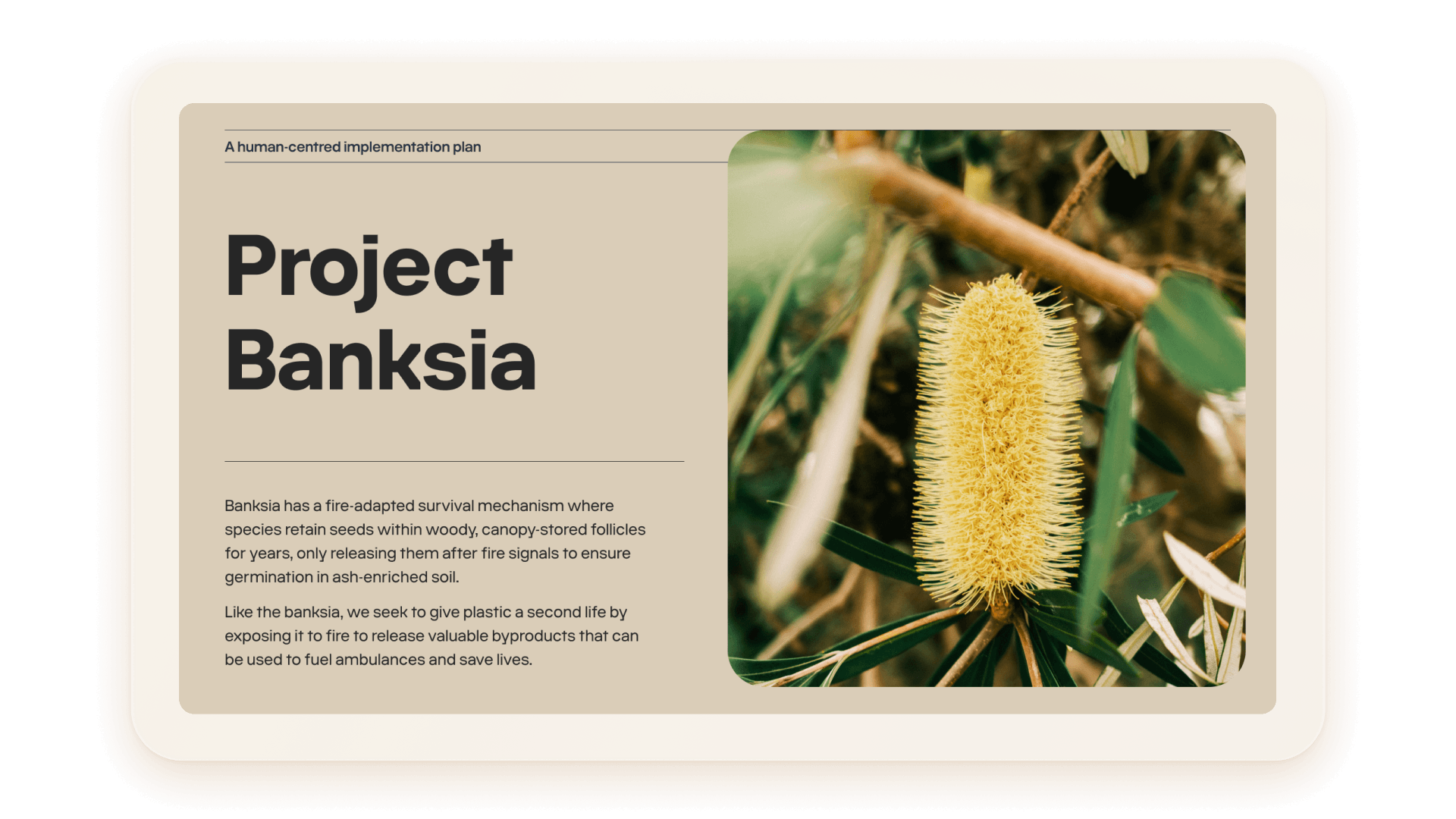
Project Banksia is a change implementation strategy for a pyrolysis system that converts single-use hospital plastics into fuel for an ambulance fleet. This was a conceptual piece, developed for the "Future Design Impact" unit of a Master of Design Futures. The project responds to a simulated brief in which a Melbourne innovation studio is engaged by the Federal and Victorian Health Departments to take a stalled pilot from proposal into reality.
The brief centred on installing a pyrolysis system at a Melbourne hospital to convert clean, uncontaminated plastic waste into biofuel. On paper the technology was ready. In practice, the system depended on hundreds of exhausted, stretched hospital workers correctly sorting plastic waste at the point of use — something the existing systems gave them no easy way to do.
This presented two intertwined challenges: designing an implementation that could work within a genuinely resistant, high-cognitive-load environment where sustainability would never be staff's first priority, and doing so inside a politically fragile project, with a disengaged government partner, an under-pressure design studio, and a supervisory group with little appetite for pushing progress.
.png)
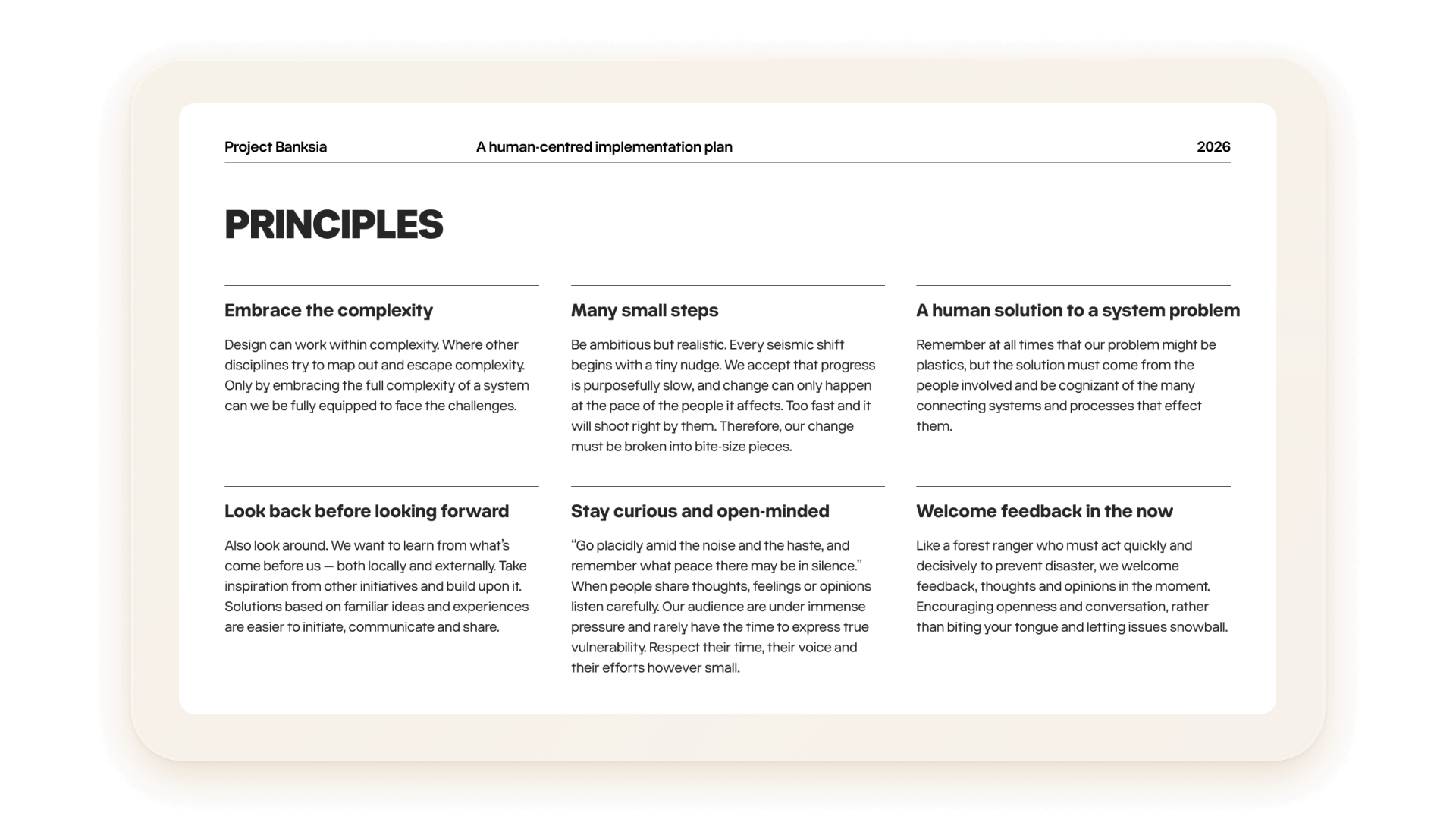
Rather than treating this as a technical rollout, the project reframed change itself as something to be designed. A "People, Process, Place" framework was used to map the confusing and inconsistent waste segregation journey from generation to disposal, and the physical infrastructure — bins, signage, routes — that didn't yet exist.
From learning about the real-world experience of staff, a guiding principle emerged: "nothing for me, without me". Rather than mandating change from above, the plan proposed forming The Grove, a small, co-design group of hospital workers with a stake in the outcome. Their role was not just to silently adopt the new process but to shape it, gaining real agency over their working conditions in the process.
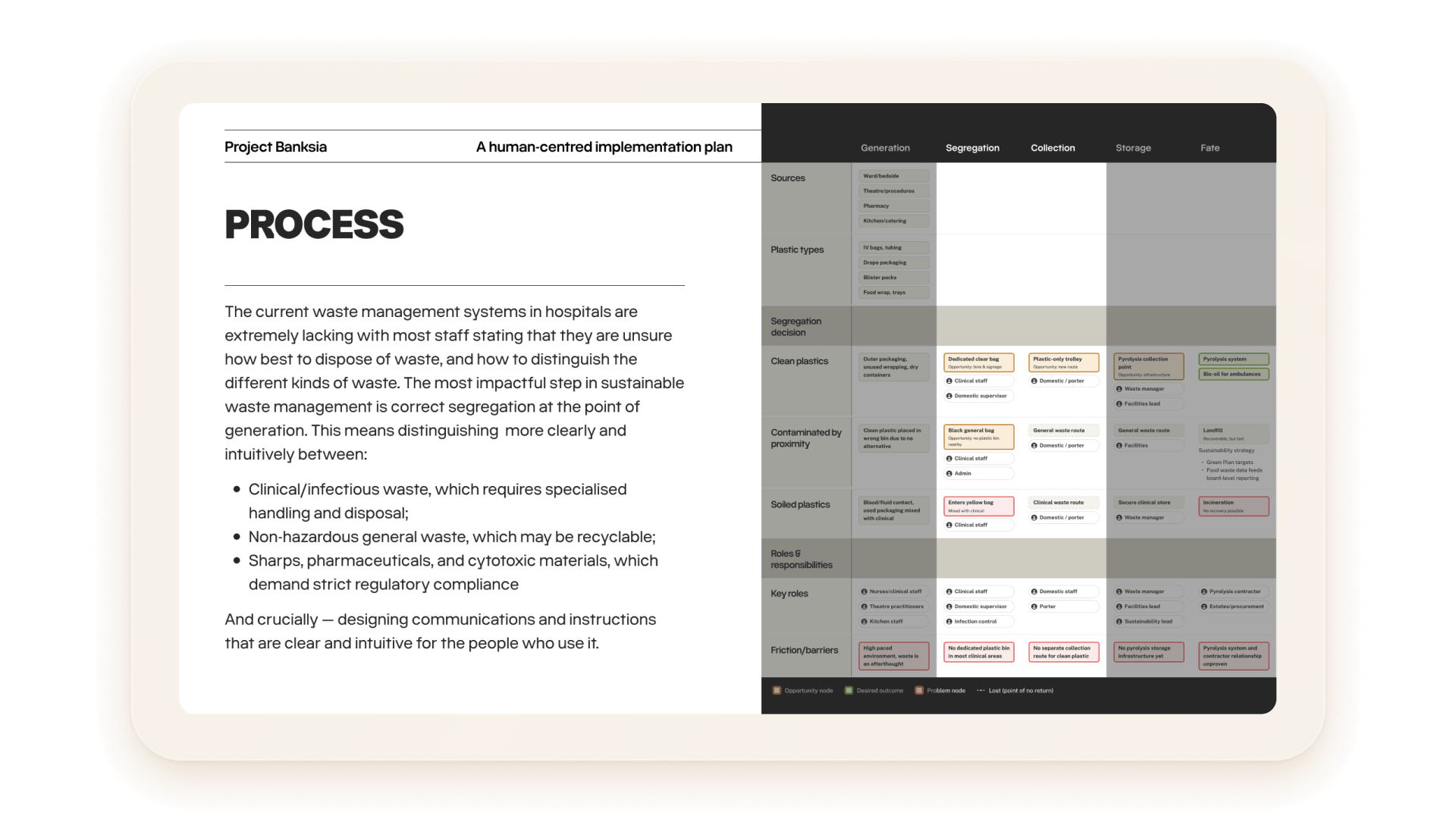
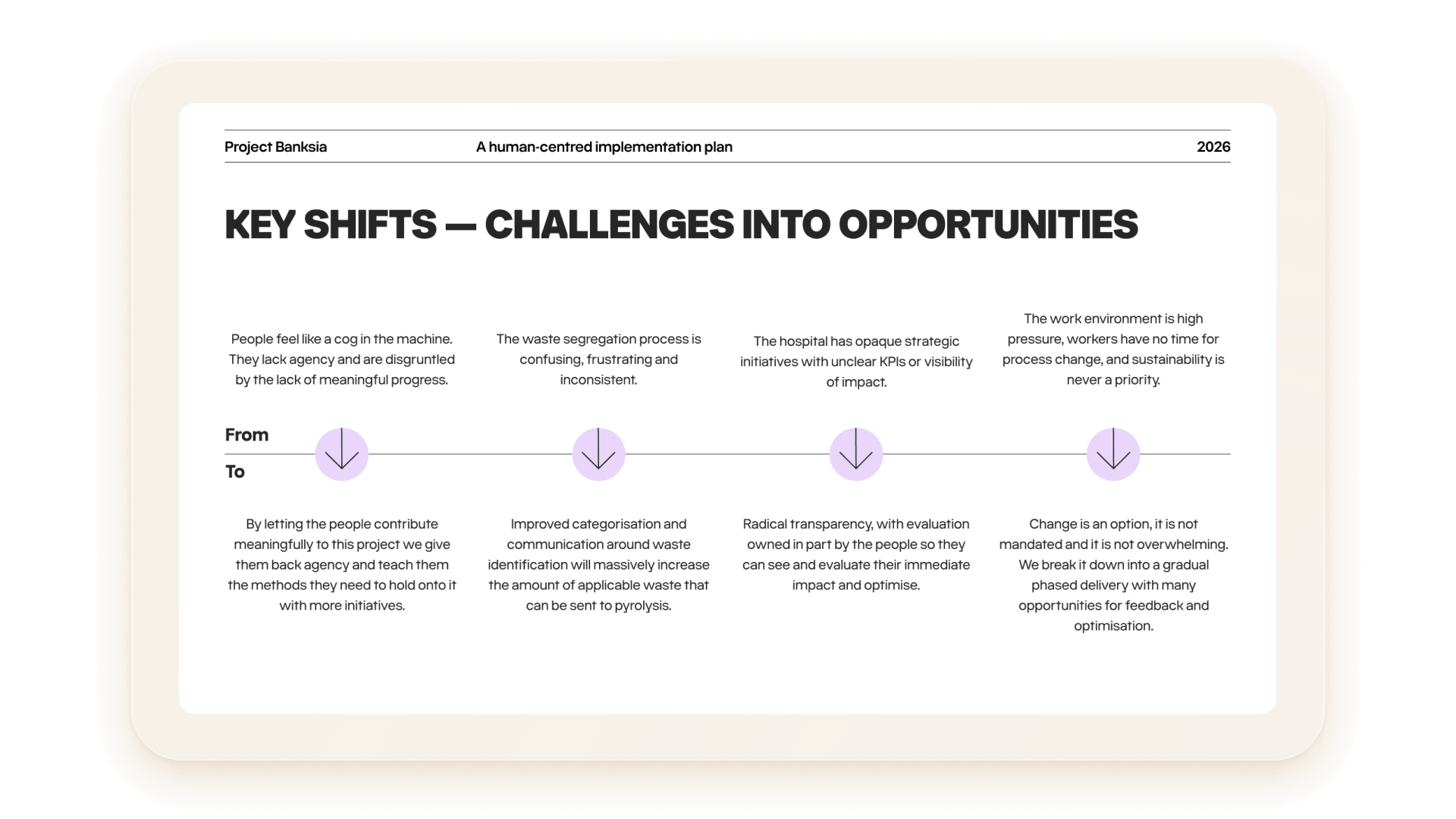
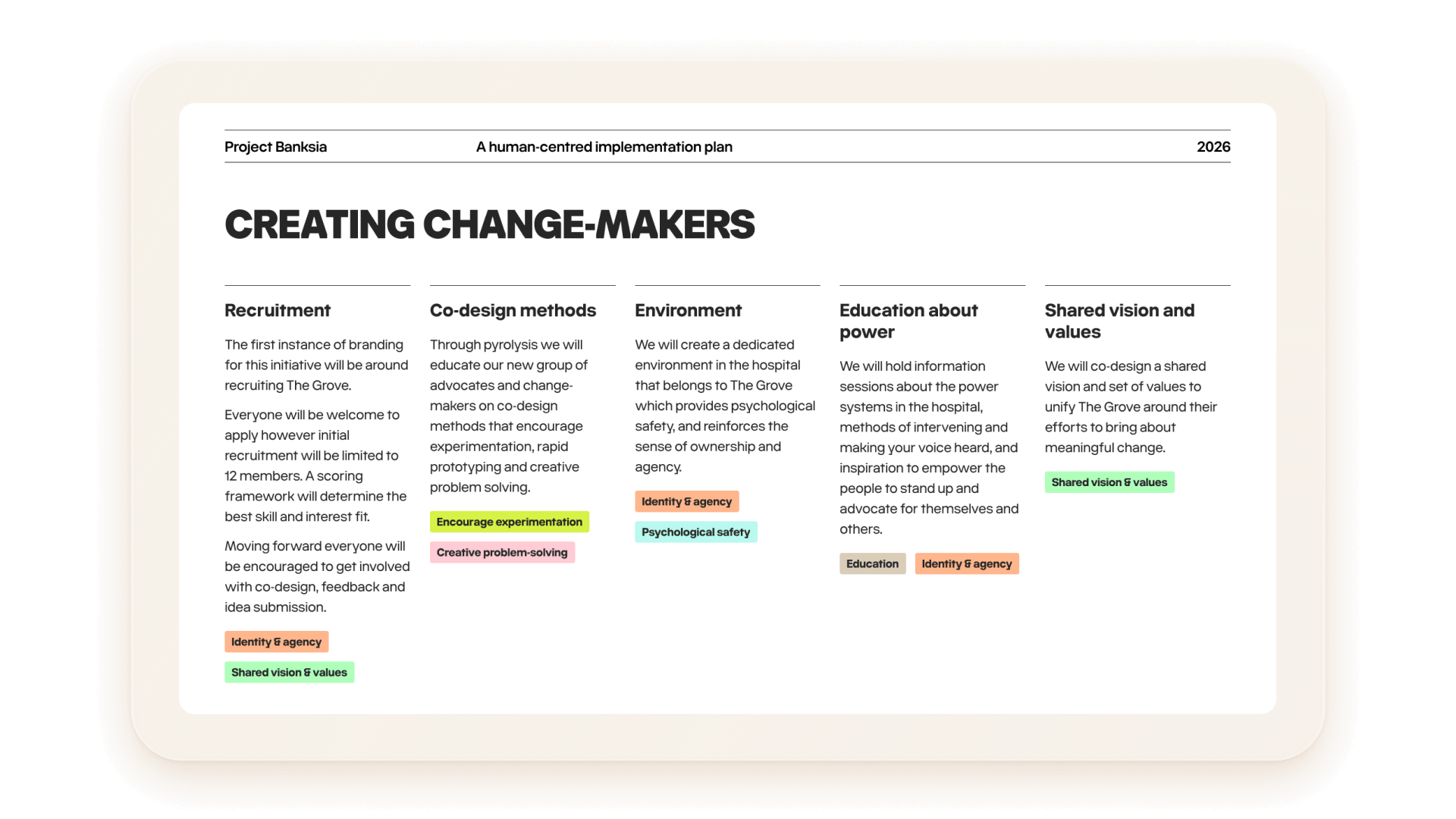
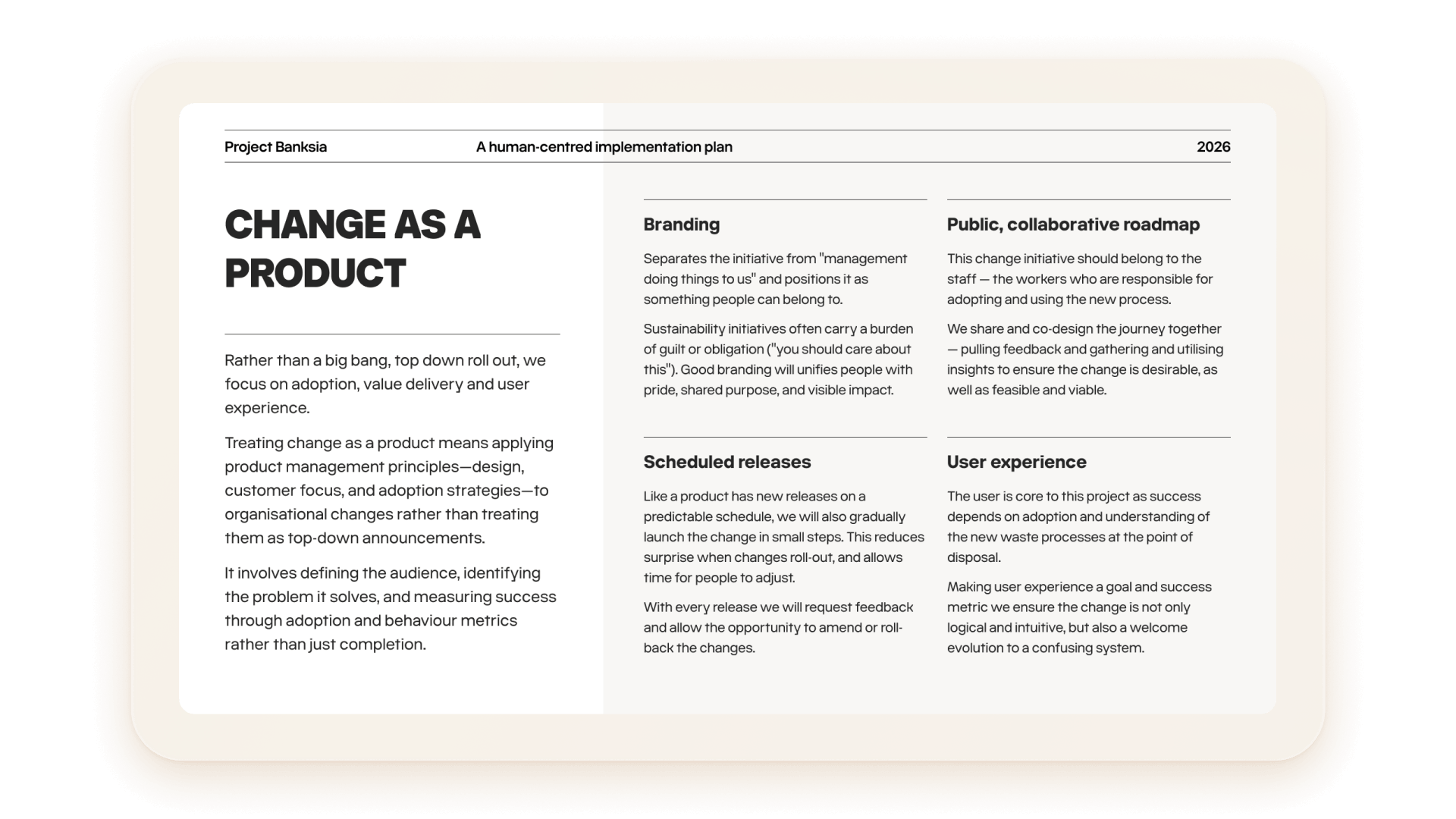
The core idea underpinning the implementation model was to stop treating organisational change as an announcement without involvement or consultation and start treating it as a product — something designed for adoption, not compliance. The rollout borrowed directly from how digital products are built and launched: a defined user (hospital staff), a public and co-designed roadmap, scheduled releases in small increments rather than a single go-live date, and the ability to gather feedback and roll back a change that wasn't working.
Underneath this sat an "atomic" logic, borrowed from Atomic Habits — the idea that durable shifts come from many small, 1% changes rather than one big transformation. Each change was scoped and isolated (new signage on a bin, not the whole waste system at once) so it could be tested, learned from and compounded, rather than risking a single high-stakes rollout that could fail outright and set the whole initiative back.
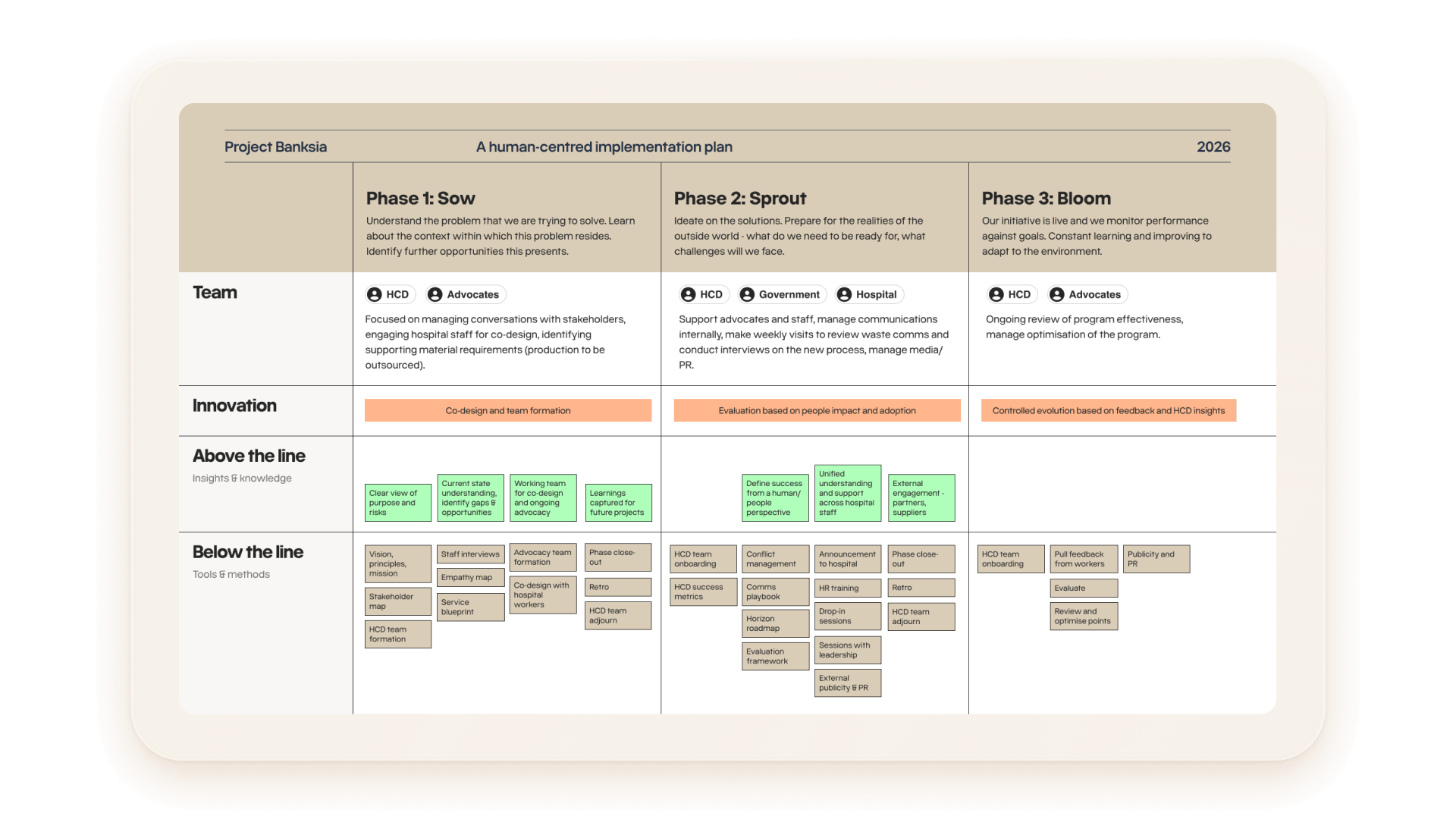
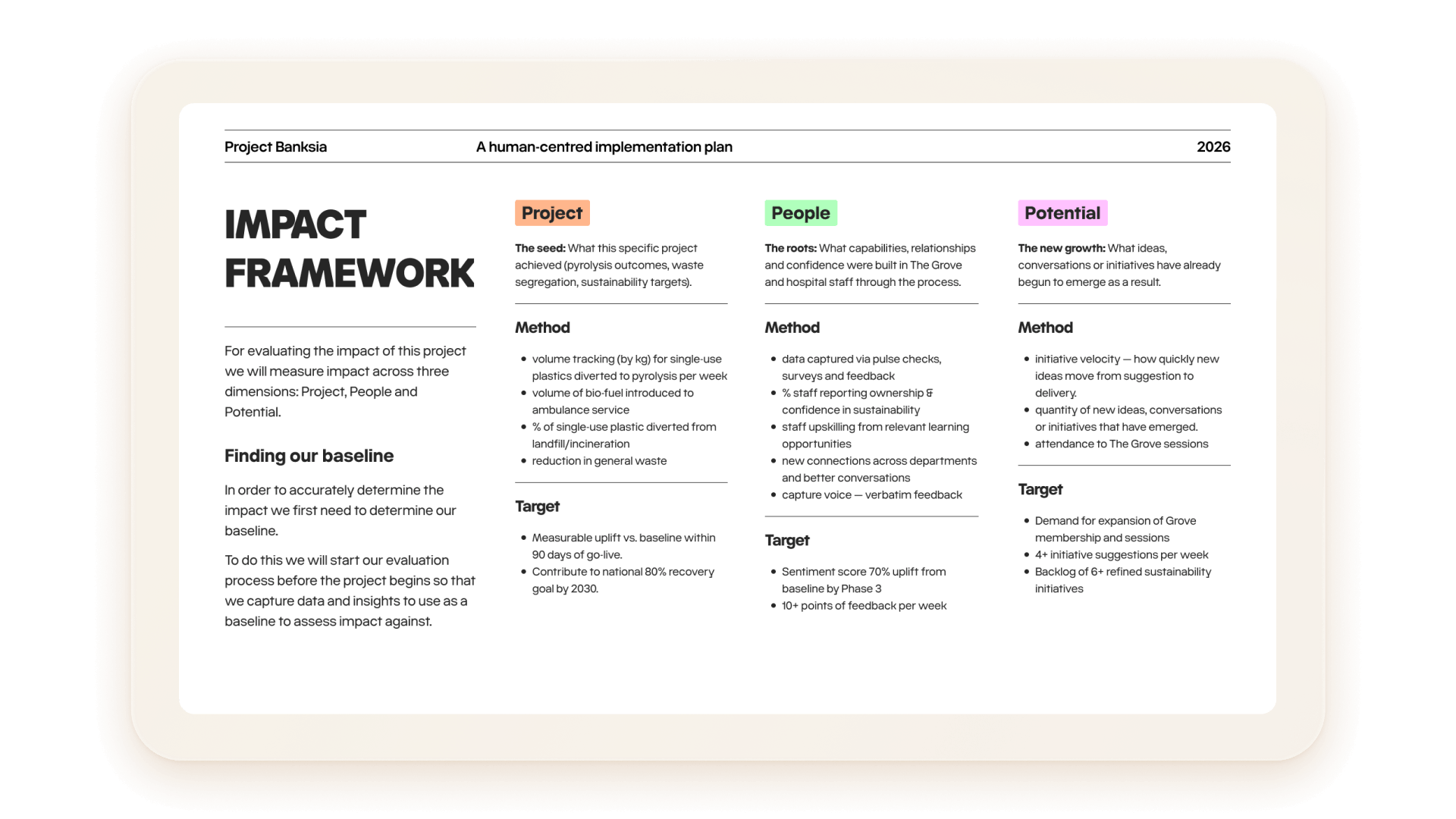
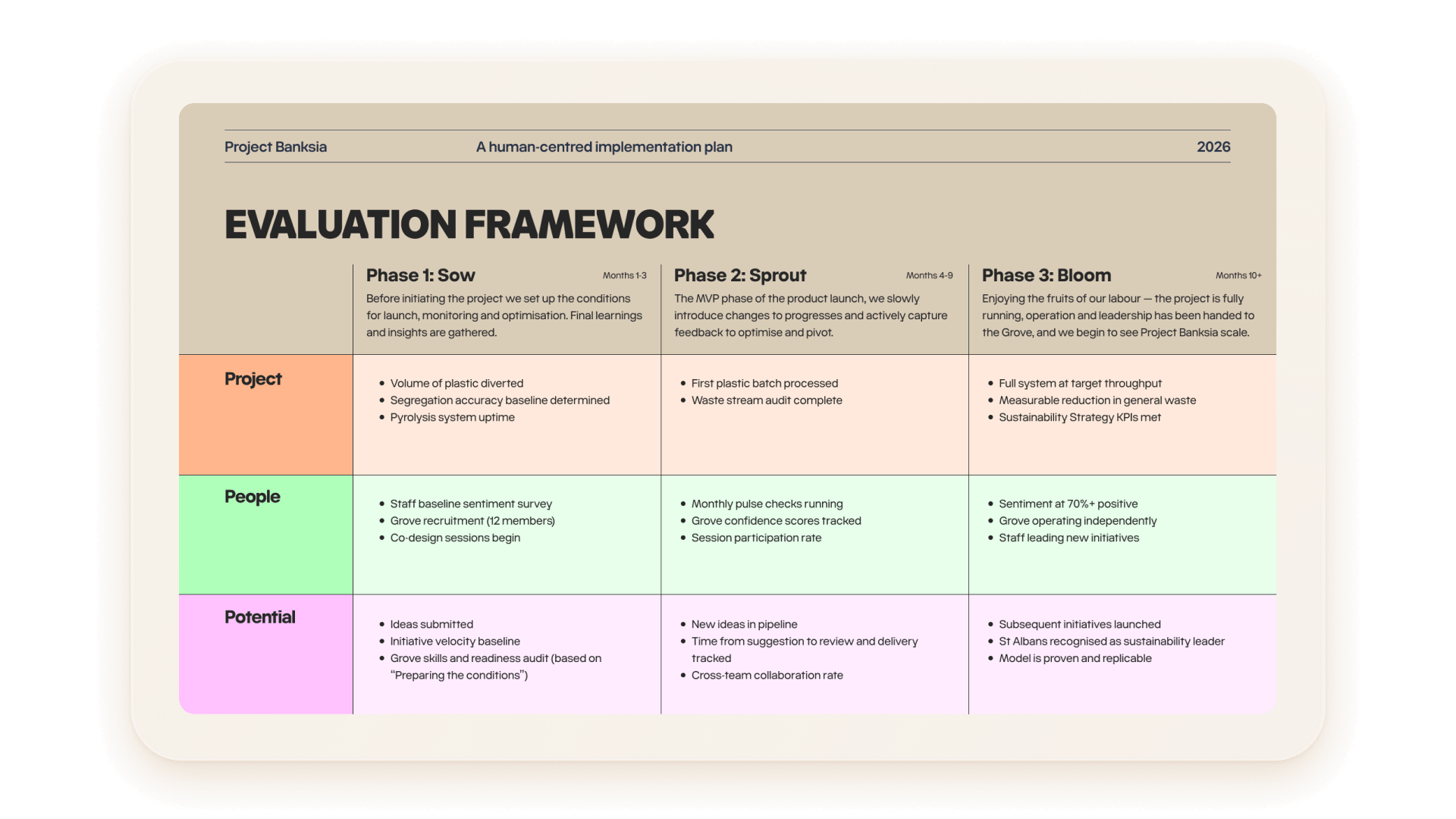
An impact framework tracked three dimensions across each phase: Project (plastic diverted, system uptime, waste reduction), People (staff sentiment, confidence and ownership), and Potential — a genuinely novel metric borrowed from product velocity, measuring how quickly new sustainability ideas moved from suggestion to delivery, as a proxy for whether the organisation itself was getting better at change.
The underlying premise was that pyrolysis itself wasn't really what was being evaluated — it was a proof of concept for the change model. Success was measured not only by what the pilot achieved, but by what it made possible: whether it built the conditions, confidence and evaluative practice for further sustainability initiatives to follow it. If "initiative velocity" improved over time, that was the strongest evidence the model was working — not the volume of plastic processed.